

How Phone Manufacturers Fixed the Foldable Screen Crease
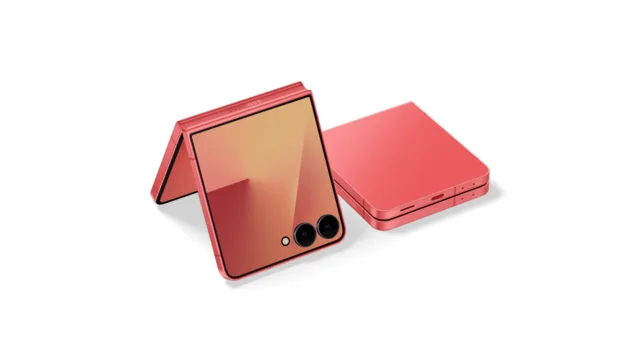
Foldable phones have been one of the most exciting developments in mobile phone technology in recent years, allowing a sizeable screen to be conveniently folded away just like a classic flip phone. The problem of creasing became apparent in the infancy of their release, being visible when turned off or in bright light and felt during use. However, this problem has been significantly reduced in the meantime thanks to clever technological advances.
In this blog, we discuss how folding screens work, why the crease occurs, and the impressive steps that manufacturers have taken to make the problem much less prominent.
How Do Folding Screens Work?
A folding screen works differently from the display on a usual smartphone. Rather than relying on a single rigid sheet of glass, it uses a flexible OLED panel composed of several very thin layers that can bend together. These layers include protective films, adhesives and ultra-thin glass, all designed to move together as the phone opens and closes.
The hinge then guides the screen into a controlled curve, so it can fold without snapping or separating. This repeated bending without breaking is what makes foldable phones so impressive, but it’s also why the crease exists. The same part of the display flexes every time the phone is opened or closed, leaving a line where the screen folds.
Why Do Foldable Phones Crease?
A foldable phone screen has the tricky job of bending thousands of times without cracking, separating, or losing touch sensitivity. The thin layers of the screen need to bend around the phone’s hinge when closed and then flatten out again once opened.
The crease appears because the same area of the screen is repeatedly compressed and stretched. Over time, that fold line becomes visible, especially when light catches it at an angle. As such, the crease is not a fault by default. It is the result of asking a screen to do something screens were never originally designed to do. However, many impressive advancements have been made to substantially reduce the effect.
How Foldable Phones Have Been Protected From Creasing
Since their first release, manufacturers have developed a variety of advancements that have made foldable phones leap and bounds ahead of where they first used to be and much more resistant to creasing, including:
Better Hinge Geometry
One of the main ways manufacturers reduced the crease was by changing the hinge. Early foldable phones often folded the screen into a tight curve, which therefore put more pressure on the area and led to a more prominent crease. Instead, newer hinge designs called ‘waterdrop’ or ‘teardrop’ hinges allow the screen to bend more gently inside the phone.
This wider curve of the hinges spreads pressure across the display rather than concentrating it in a single sharp line. As a result, the crease looks softer, and the phone can often close more neatly.
Ultra-Thin Glass
Another major step forward was the development of ultra-thin glass. Standard glass can’t fold, while plastic can feel less premium and mark more easily. Ultra-thin glass combines the best qualities of them both, as it’s flexible enough for foldables but gives the screen a firmer, smoother feel.
Manufacturers have also improved the protective films, adhesives, and support layers beneath the display. These changes help the screen to sit flatter when open and make the crease less distracting during everyday use.
Screen Layers Became Smarter
While a creased screen may seem like a display-only problem at first, the layers beneath it also have an impact. If one layer is too thick, too stiff, or too soft, it can affect how the screen folds. As a result, newer foldable phones use more advanced layering to manage pressure.
Some models use reinforced backing plates behind the display, while others use flexible support structures that help the screen to move more easily with the hinge rather than fight against it.
If the support structure is uneven, the crease can look sharper. If the hinge and backing materials work together smoothly, the screen can sit flatter. So, these considerations of the phone’s deeper layers have helped address the whole problem, rather than a single obvious cause.
Are Creased Screens Still a Concern?
As far as the above advances in technology have reduced the problem of creased foldable phone screens, the truth of the matter is that the problem isn’t wholly eliminated yet. With regular, prolonged use, most foldable phones will still show some level of creasing. Under strong light, at certain angles, or when the display is off, you may still notice a line where the screen folds.
However, what is different with current foldable phones is that the experience is affected much less, as the crease is far less distracting than it used to be. When the screen is bright and you’re using your phone, it often fades into the background. You may still feel a slight dip if you run your finger directly across the fold, but it is usually less pronounced than on older models.
The good news is that the crease is no cause for concern as it once was. In most cases, some minor level of creasing is normal. As long as the display is responsive, the hinge feels smooth, and there are no cracks, black spots, lifting screen protectors, or unusual bulges around the fold, your foldable phone is fully safe to use.
Sell Your Phone and Upgrade to a Foldable with Mazuma
With foldable phones only becoming more advanced, the problem of creasing may one day be completely eliminated! The many exciting features of these phones may have led you to consider getting one or selling your Galaxy Flip and upgrading to a newer model. Either way, you can make your upgrade that much more affordable when you sell your phone with Mazuma!
We offer the best prices for your old phone and technology, and can pay you in no time at all. In fact, when you sell your phone with us, you can get paid the same day we receive it! (This applies Monday to Friday, excluding bank holidays, and does not apply to orders that arrive with us after 2pm). Whether your phone is in great condition or broken, we’re happy to take it and either find it a new owner or recycle it as part of our sustainable practice.
If you have any questions about selling your phone with us and our process, a member of our friendly team will be happy to help you when you get in touch.